Croatia β Switzerland Β· 2β3 May 2026 Β· The return leg β home the long way: past Salzburg, a night in Germany, then back over the Arlberg. So smooth we stopped writing the numbers down. Right up until we didn't.
The outbound trip had been an adventure β Alpine passes, a vanished charger in Imst, a 0% crawl into Spittal, four broken chargers at Velden. We arrived in Croatia with stories. So leaving PoreΔ, there was a quiet expectation that the way home would be more of the same.
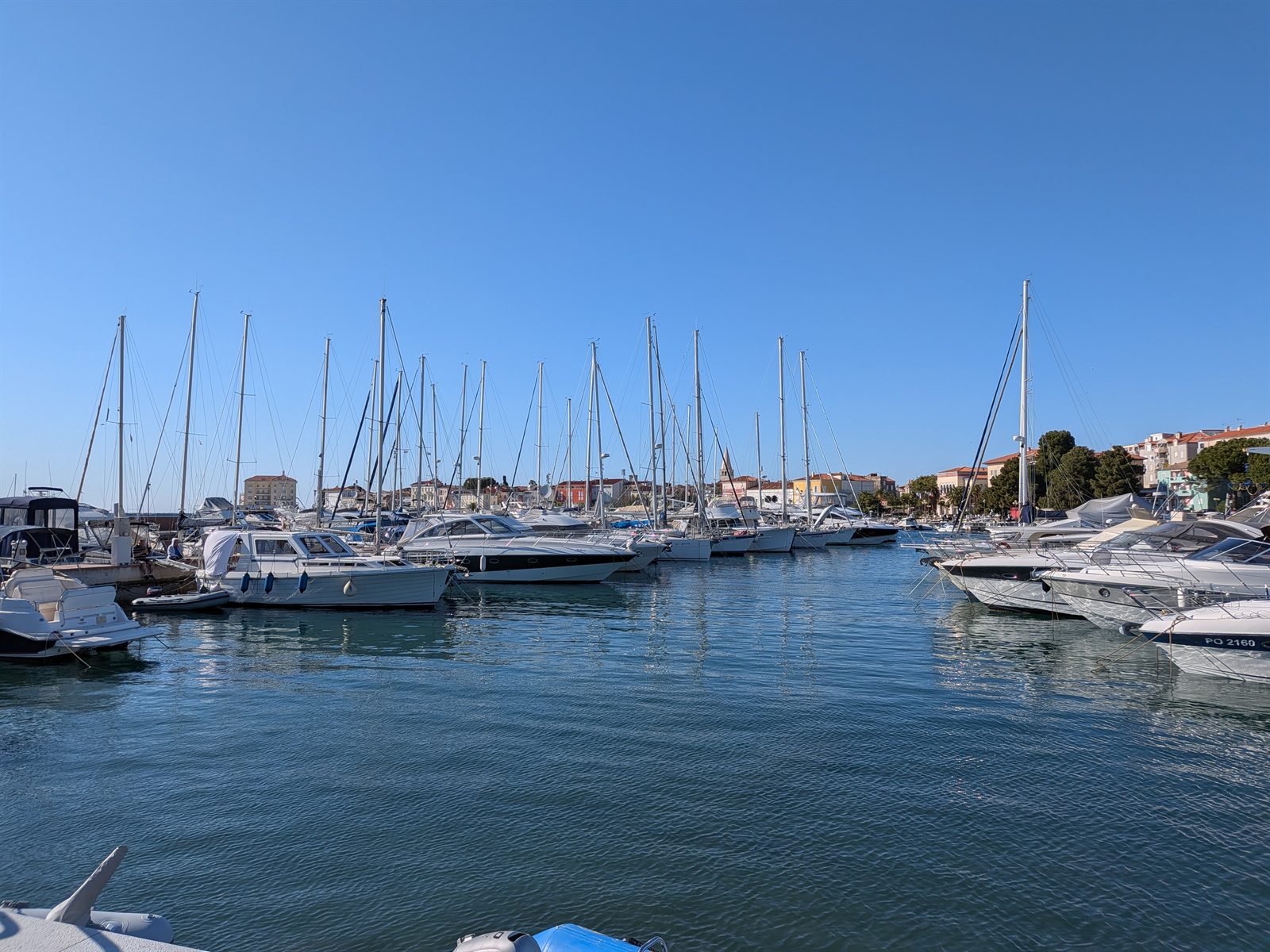
It wasn't β partly because we made sure of it. We'd had enough of the Brenner and the dip through Italy on the way down, so this time we dropped a waypoint to force a different corridor home and let evOS replan around it: north past Salzburg, across into Germany, and back over the Alps. It sequenced the new stops, set the targets, and simply did the job. We loaded the bags, took one last look at the marina, and pointed the smart north.
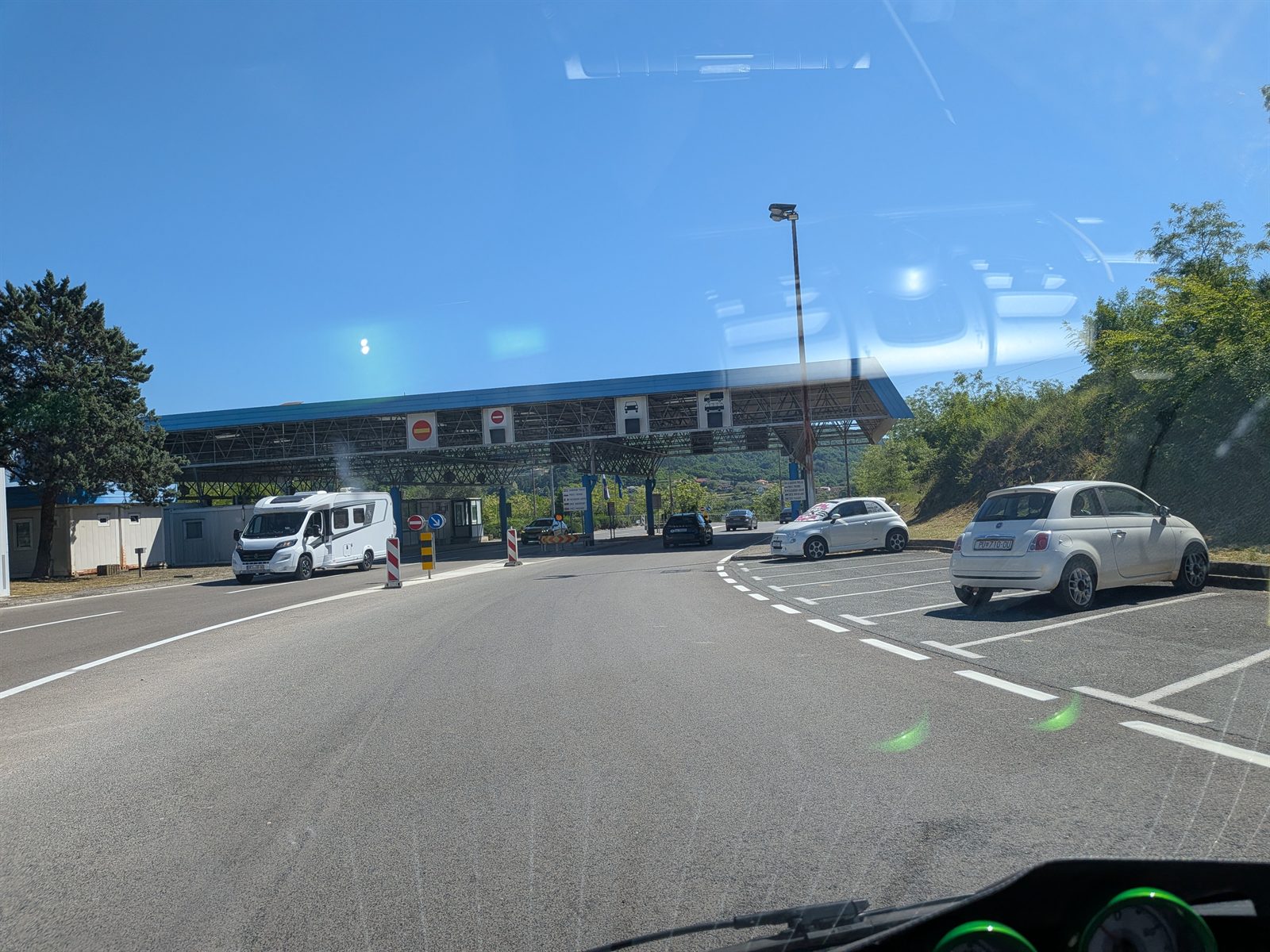
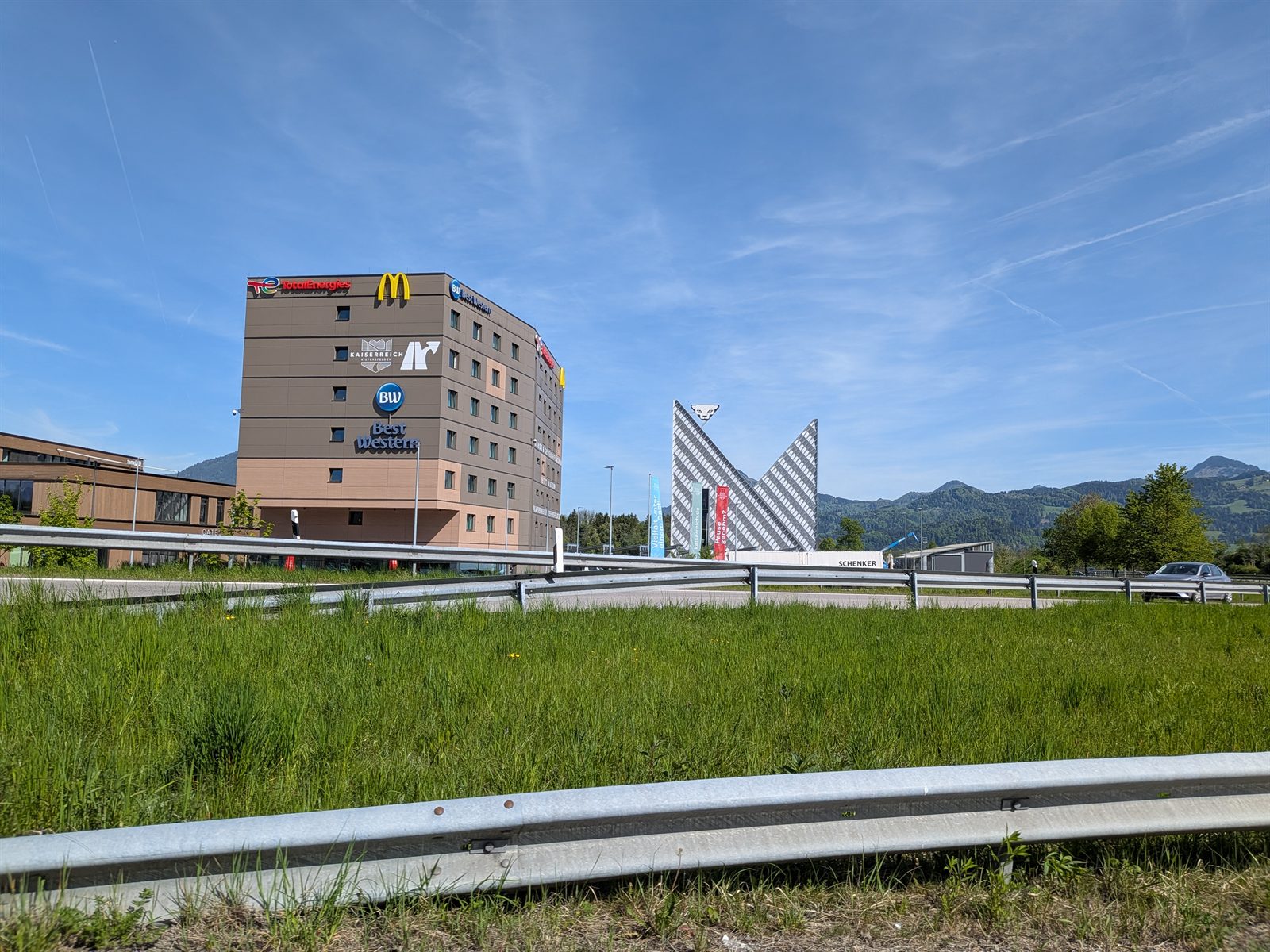
The route: PoreΔ β up the Istrian coast β Slovenia β past Ljubljana β Bled β the Karawanken tunnel β Carinthia β up through the Tauern β past Salzburg β across into the German Inn valley, to a hotel right before the border back into Austria. 560-ish kilometres on day one, and almost nothing to report.
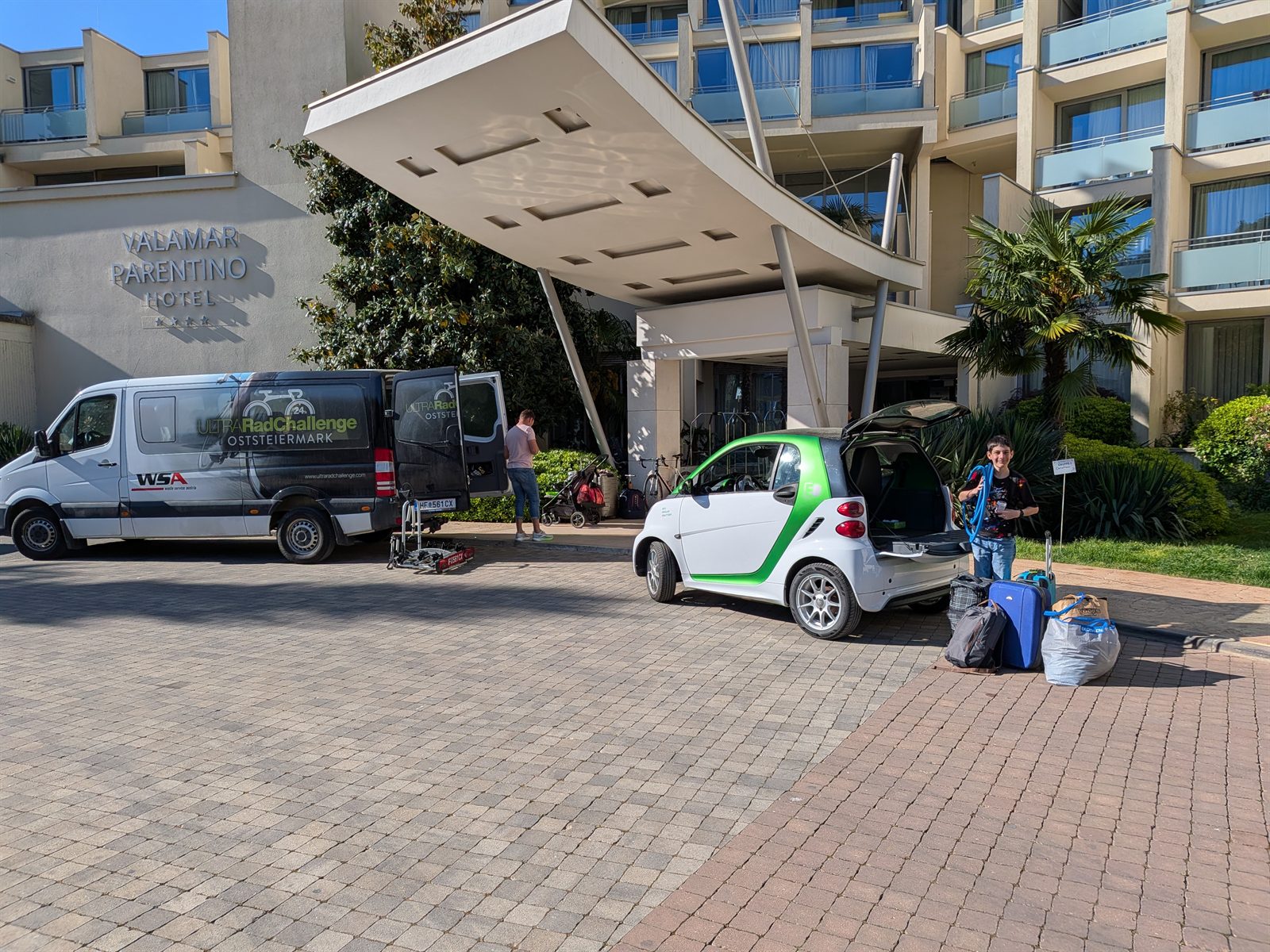
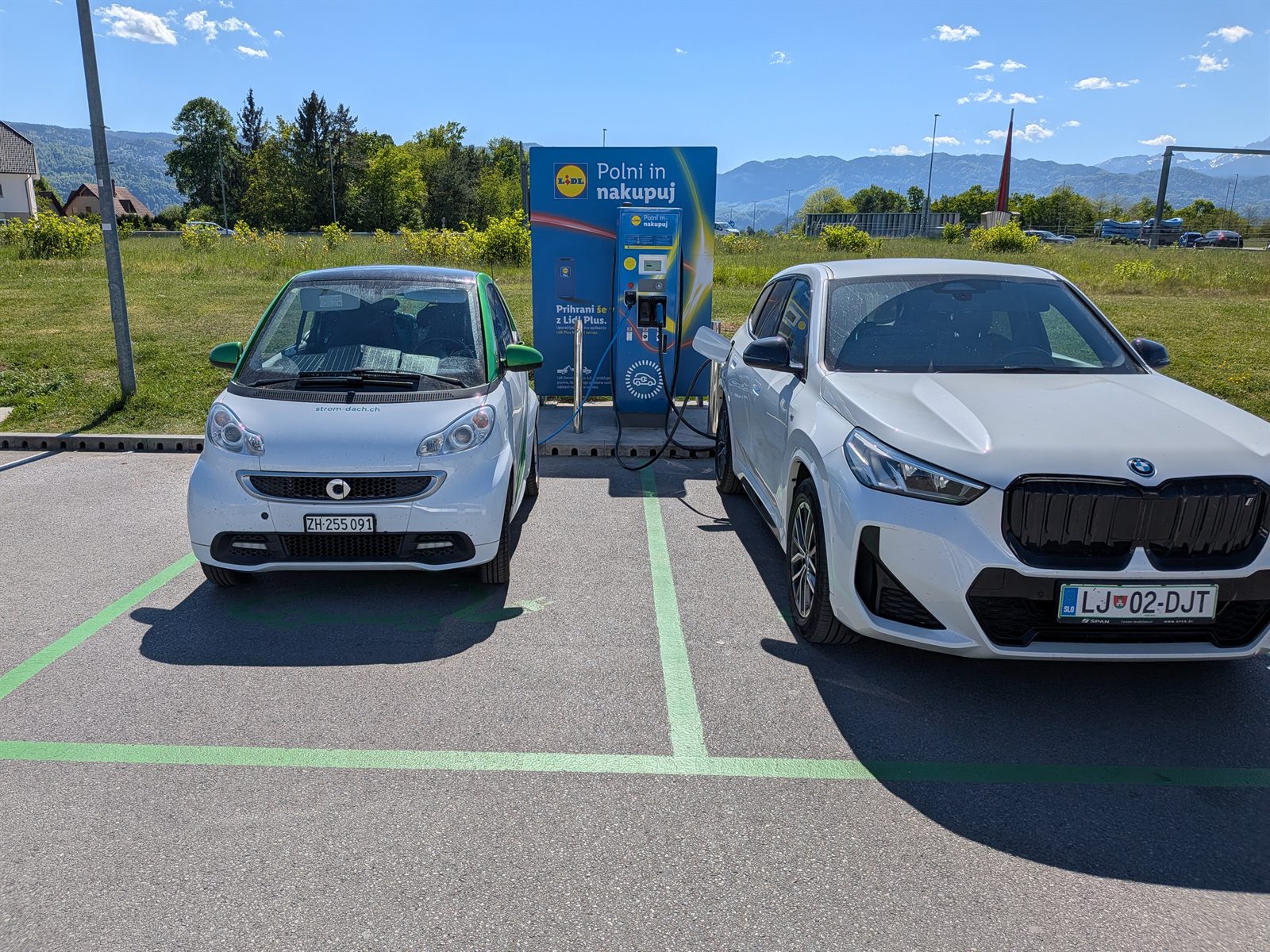
Here is the thing about good navigation software: when it works, there's nothing to write about. Slovenia went by in a blur of motorway and a charge stop near the border. Past Ljubljana, a top-up at a Lidl near Bled next to a brand-new BMW iX1 β our 15-year-old smart plugged in beside it, doing the same job for a fraction of the battery.
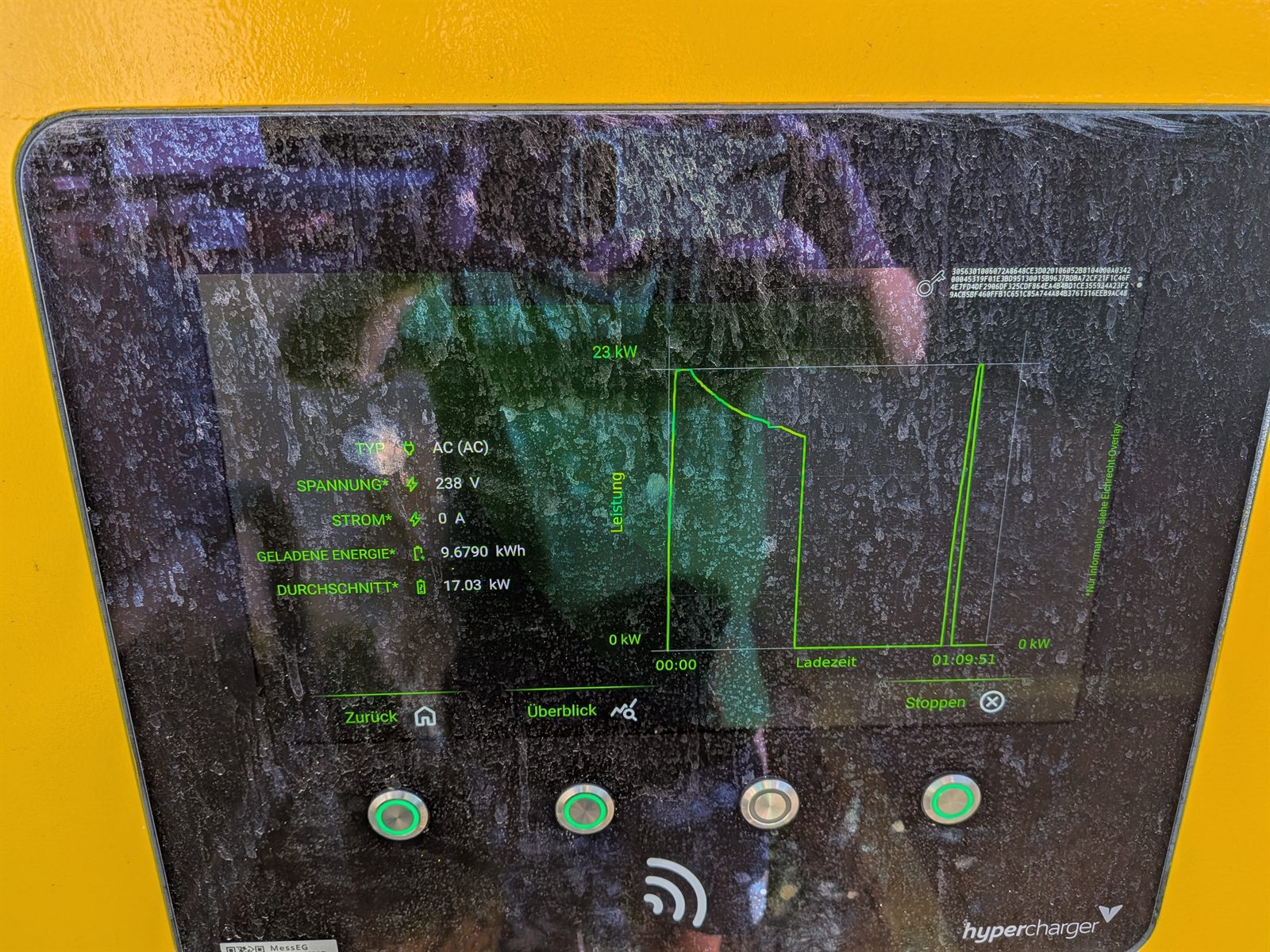
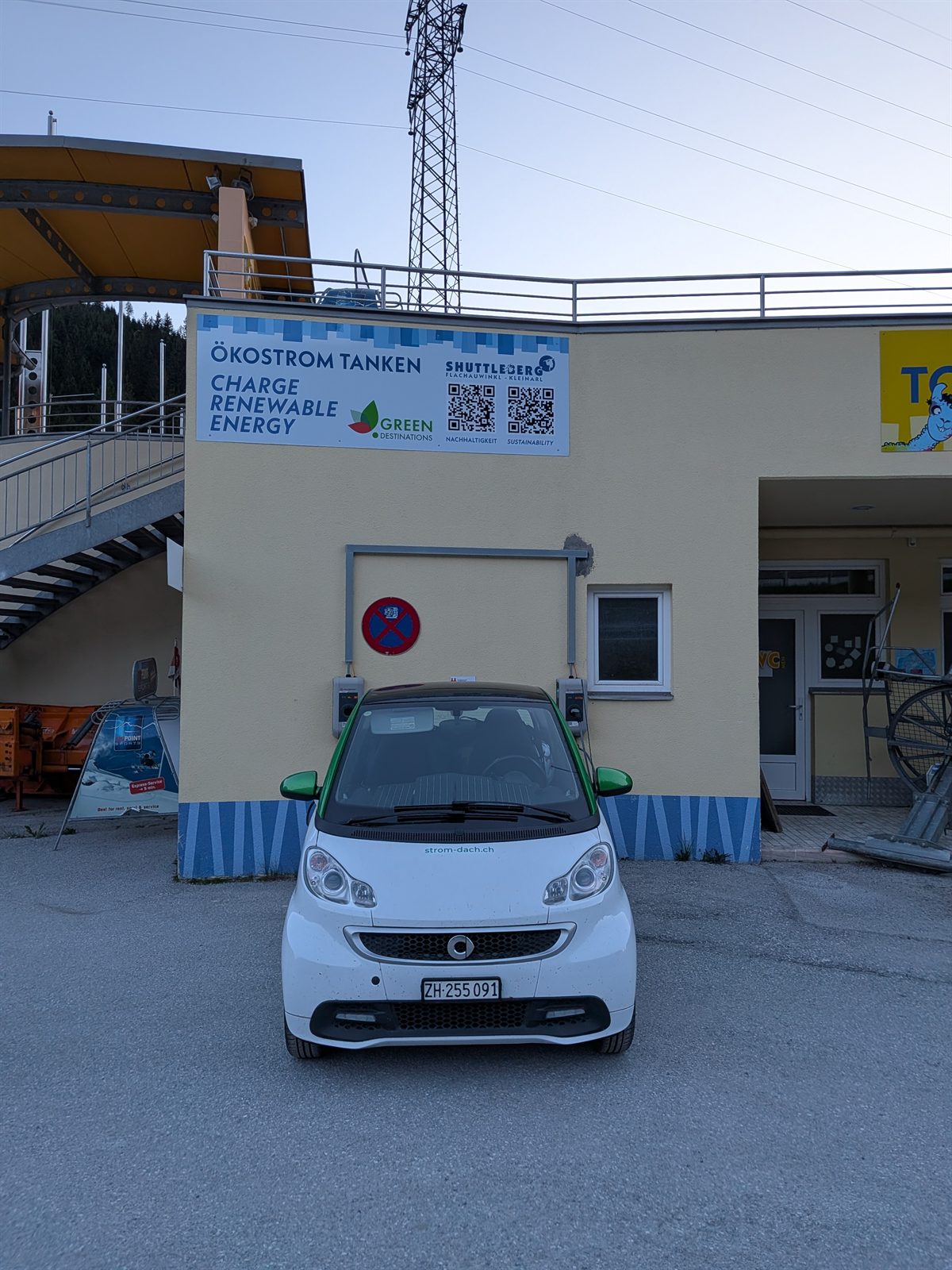
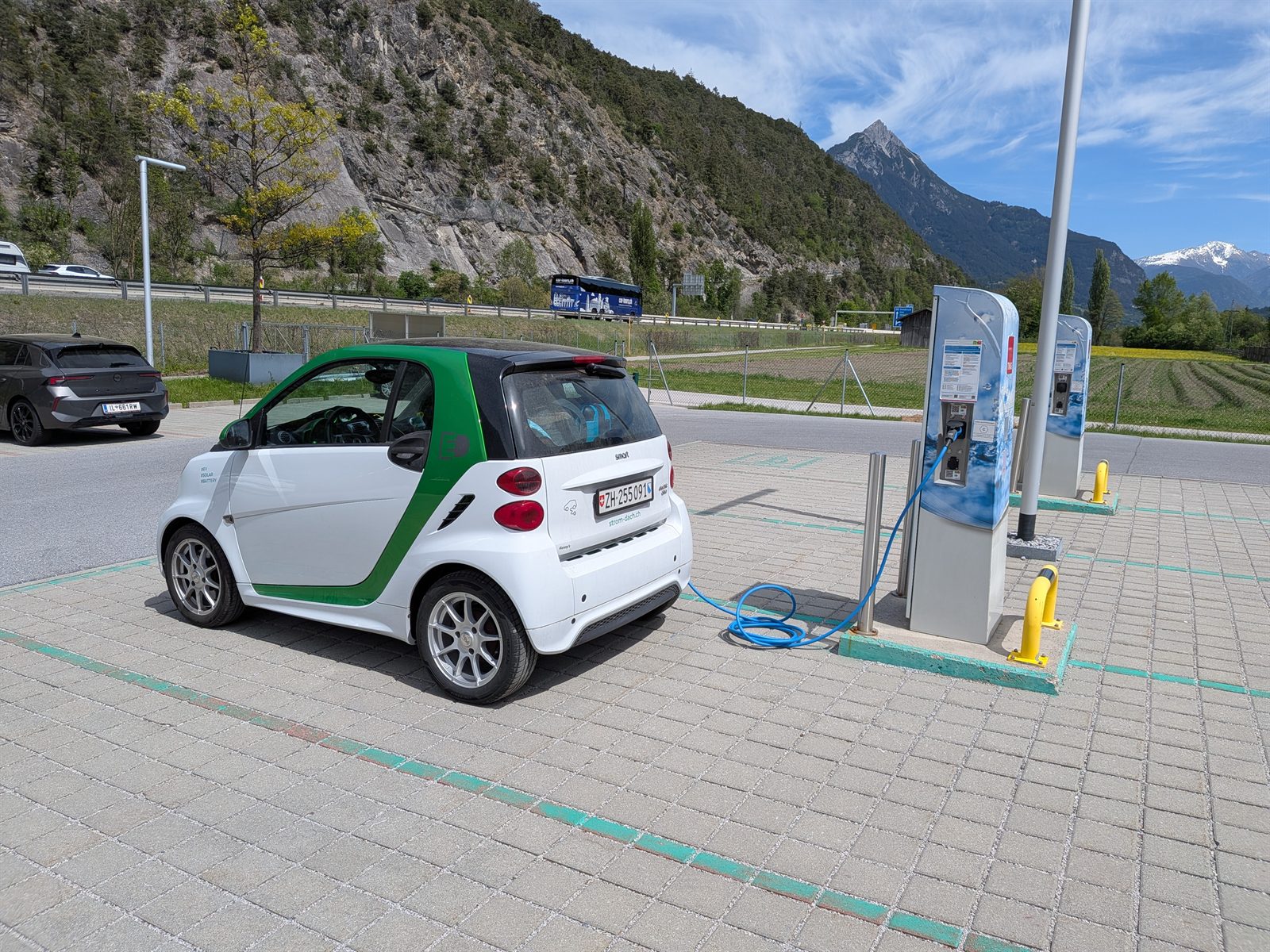
Then back through familiar ground: Spittal an der Drau, same Hypercharger as the outbound trip, same McDonald's across the road that remains a family institution. A renewable-energy charger at a ski resort in the Tauern β "Charge Renewable Energy," said the sign, so we did.
It was all so predictable that we got complacent. On the way down we'd logged every stop, every arrival SoC, every kWh. On the way home? evOS had it handled. The arrivals landed where it said they would. We stopped writing things down. We just drove, and let the system count.
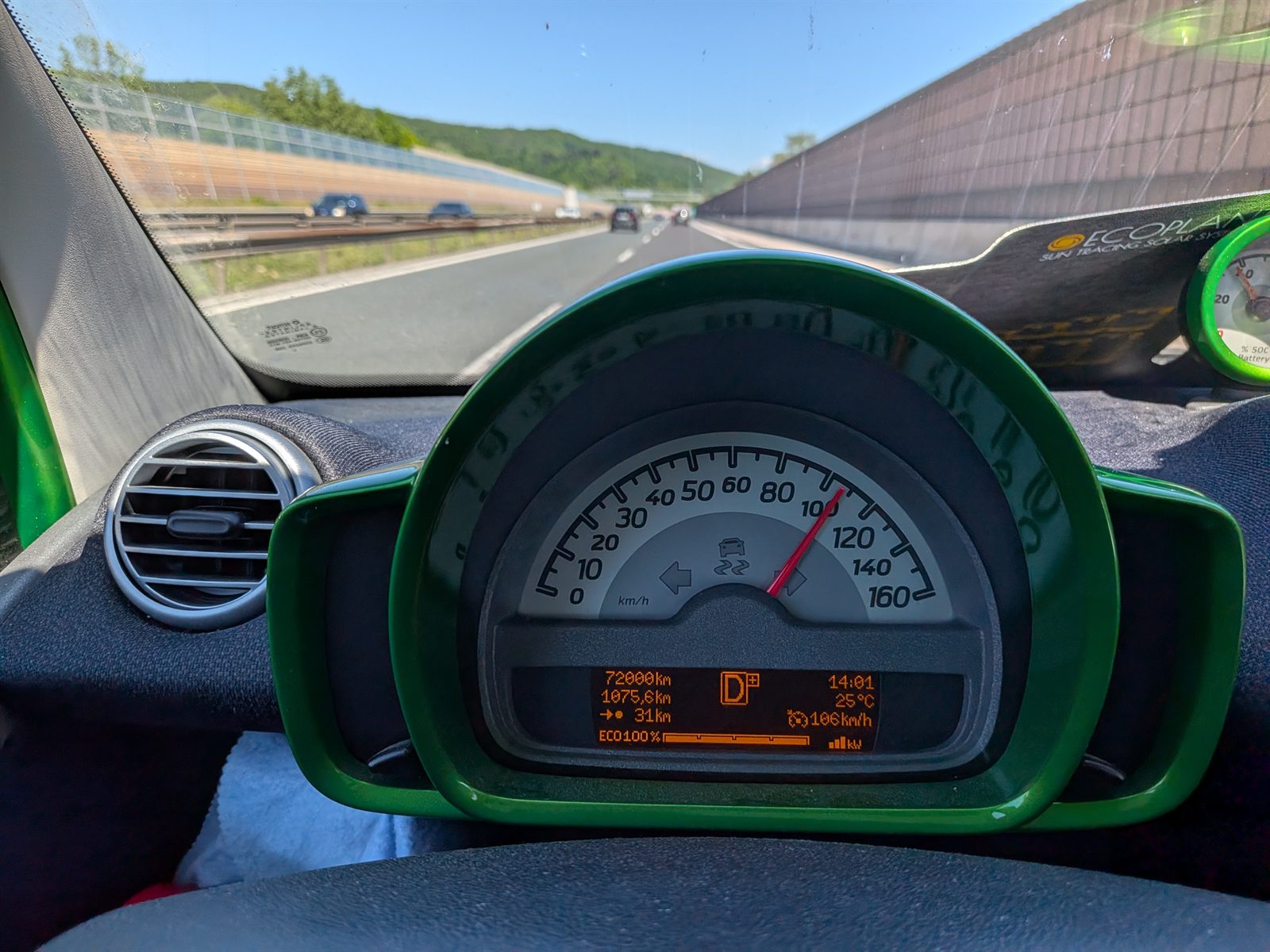
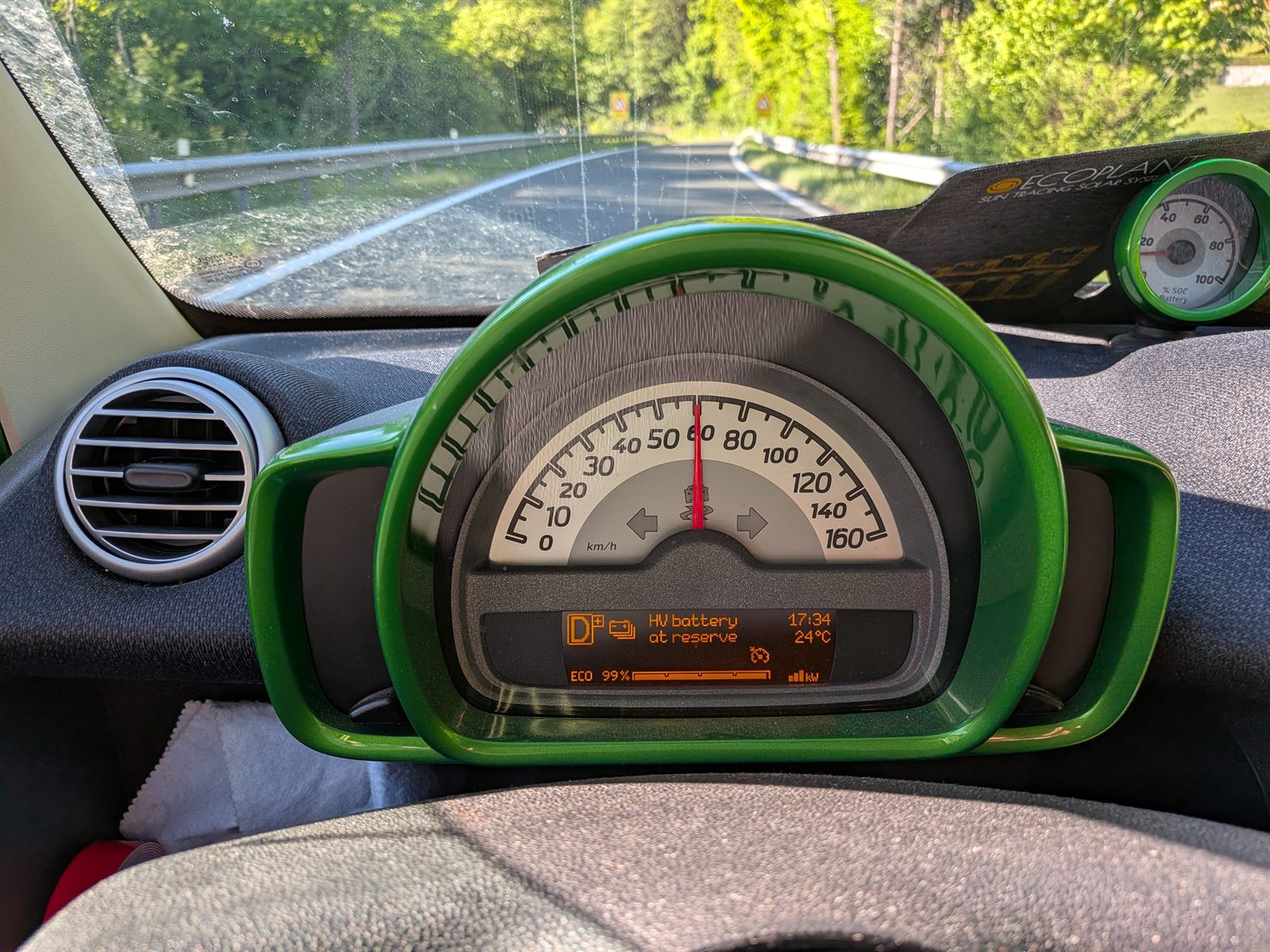
That turned out to be a mistake. But not yet. For now: motorway, 106 km/h, ECO 100%, nothing to see here.
Morning on the German side of the Inn, then straight back across the border into Austria: Kufstein, Innsbruck, and on to Imst β the town that ate ten minutes of our outbound trip with a charger that no longer existed. This time the stop was clean. An AC charger, a sharp peak in the background, coffee, gone.
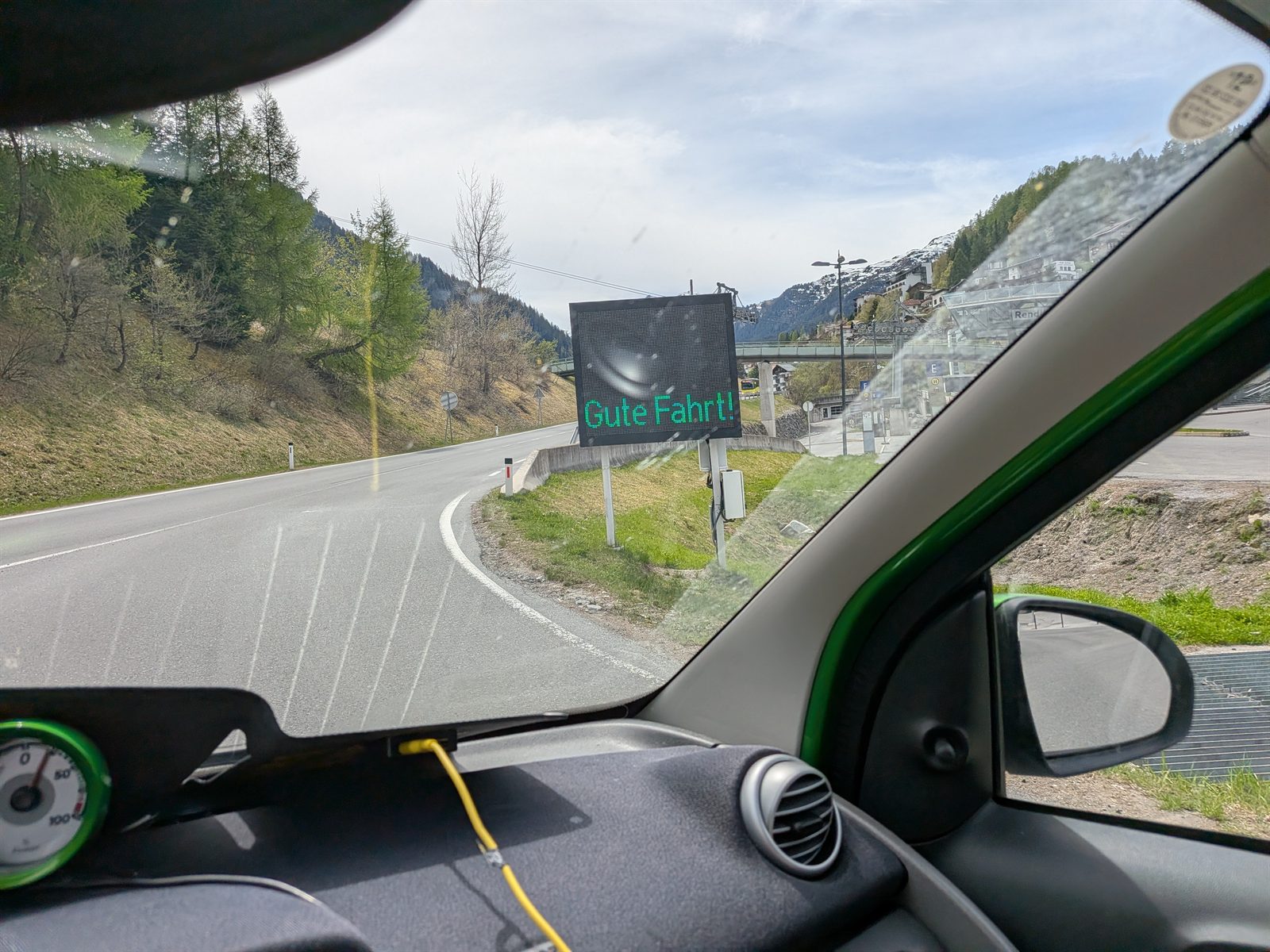
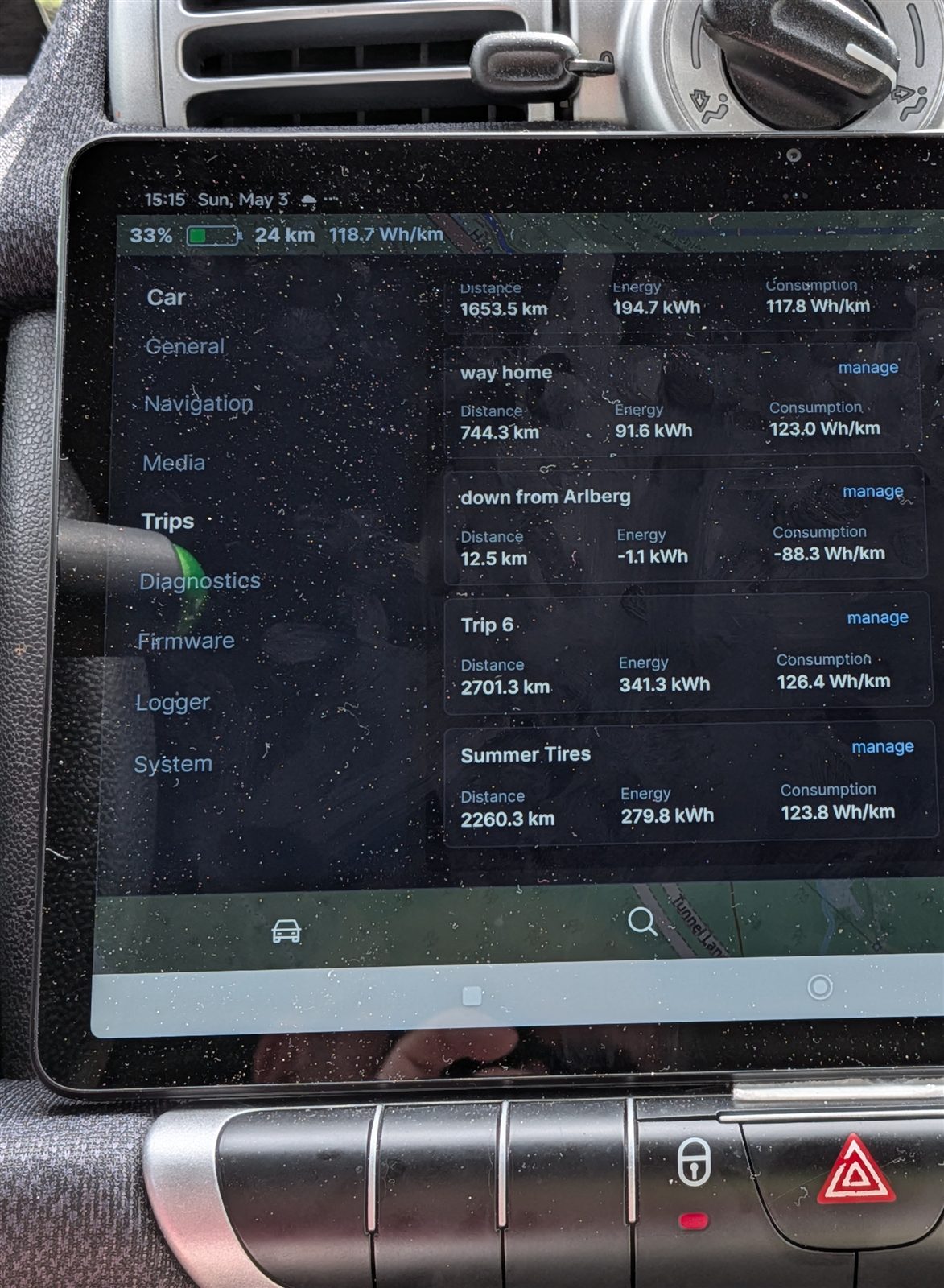
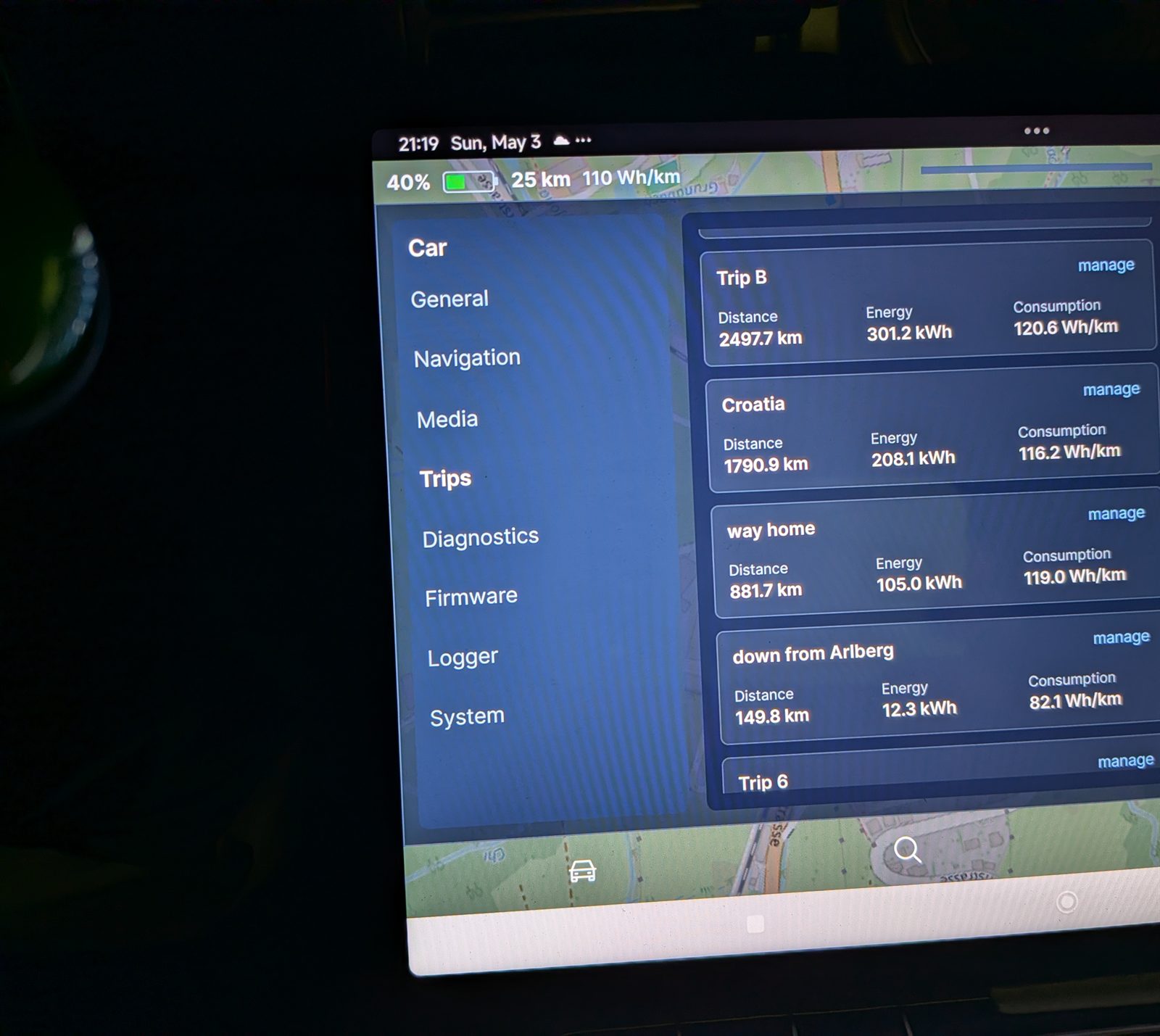
Then the Arlberg β and this time, the pass. On the way out we'd slipped through the tunnel; going home we climbed over the top. A road sign wished us "Gute Fahrt!", and on the long descent into Vorarlberg evOS logged something satisfying: the "down from Arlberg" counter ran negative. Mid-descent the screen showed β88.3 Wh/km β the car putting energy back into the battery faster than it used any. By the bottom, that whole leg averaged 82 Wh/km. Downhill in an EV is a refund.
33% on the clock, the Arlberg behind us, Switzerland an hour away. Everything was fine. Everything was, in fact, going perfectly.
The "down from Arlberg" trip counter is the kind of number that makes the whole project worth it: a full mountain descent logged at 82 Wh/km, dipping to β88 Wh/km mid-slope as regen outpaced consumption. evOS doesn't just route around elevation β it shows you, in real numbers, exactly what the mountain gives back.
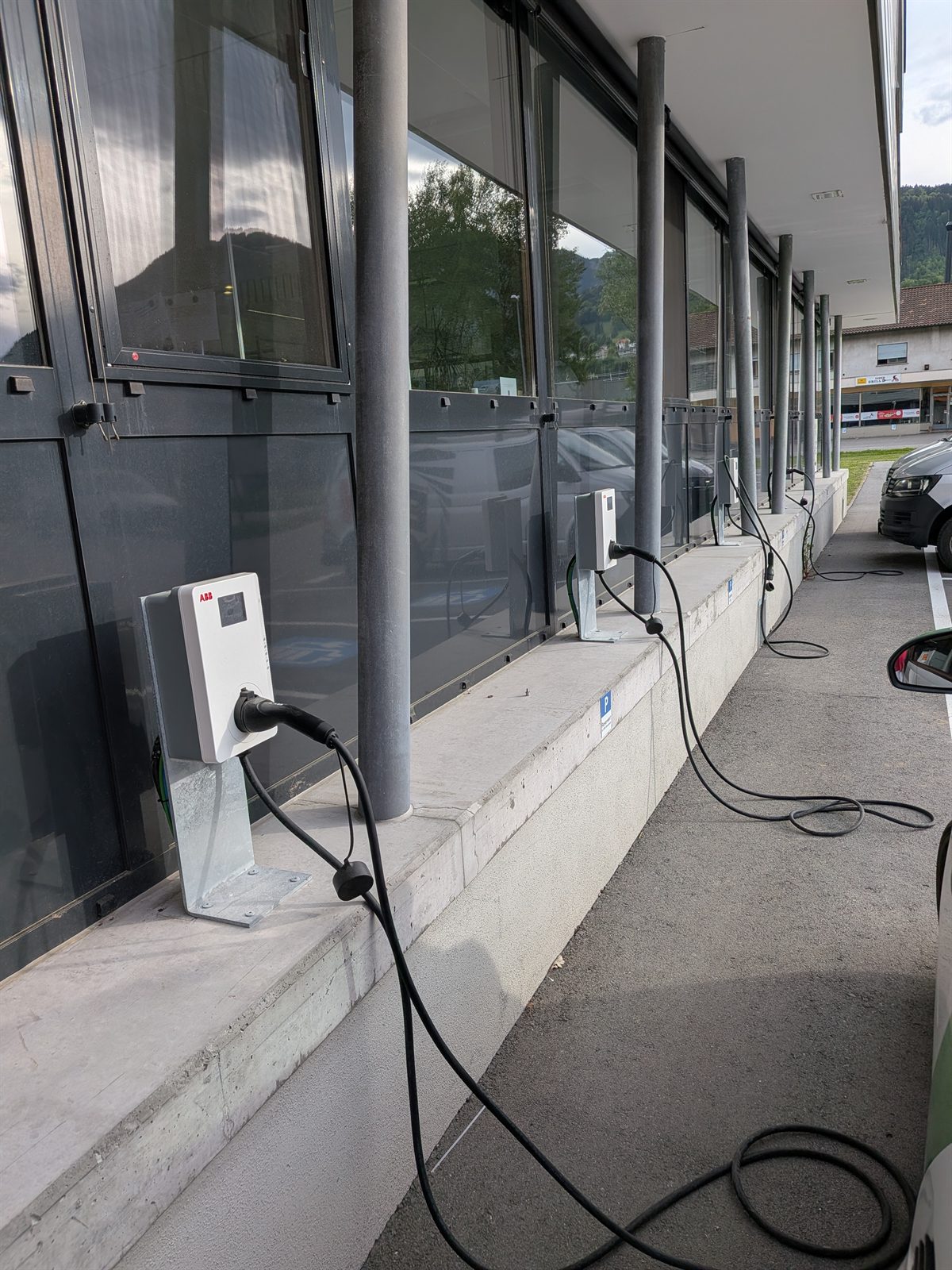
One charge stop short of home, the smugness caught up with us. The plan called for a top-up in Frastanz, a village in the Vorarlberg Walgau β evOS had it sequenced at the local utility, illwerke vkw. Routine. Except Frastanz turned out to be a museum of dead chargers, and we toured the whole collection.
First, the reliable Lidl charger β the one we'd counted on β out of order. The petrol station right next door? Its charger had been removed, the replacements not yet installed. The Spar supermarket across the way: charger present, but behind a barrier β closed, because Sunday. We even rolled onto the lot of the electricity provider itself, reasoning that surely the power company's own chargers would work. They were either switched off or locked to employee charge cards.
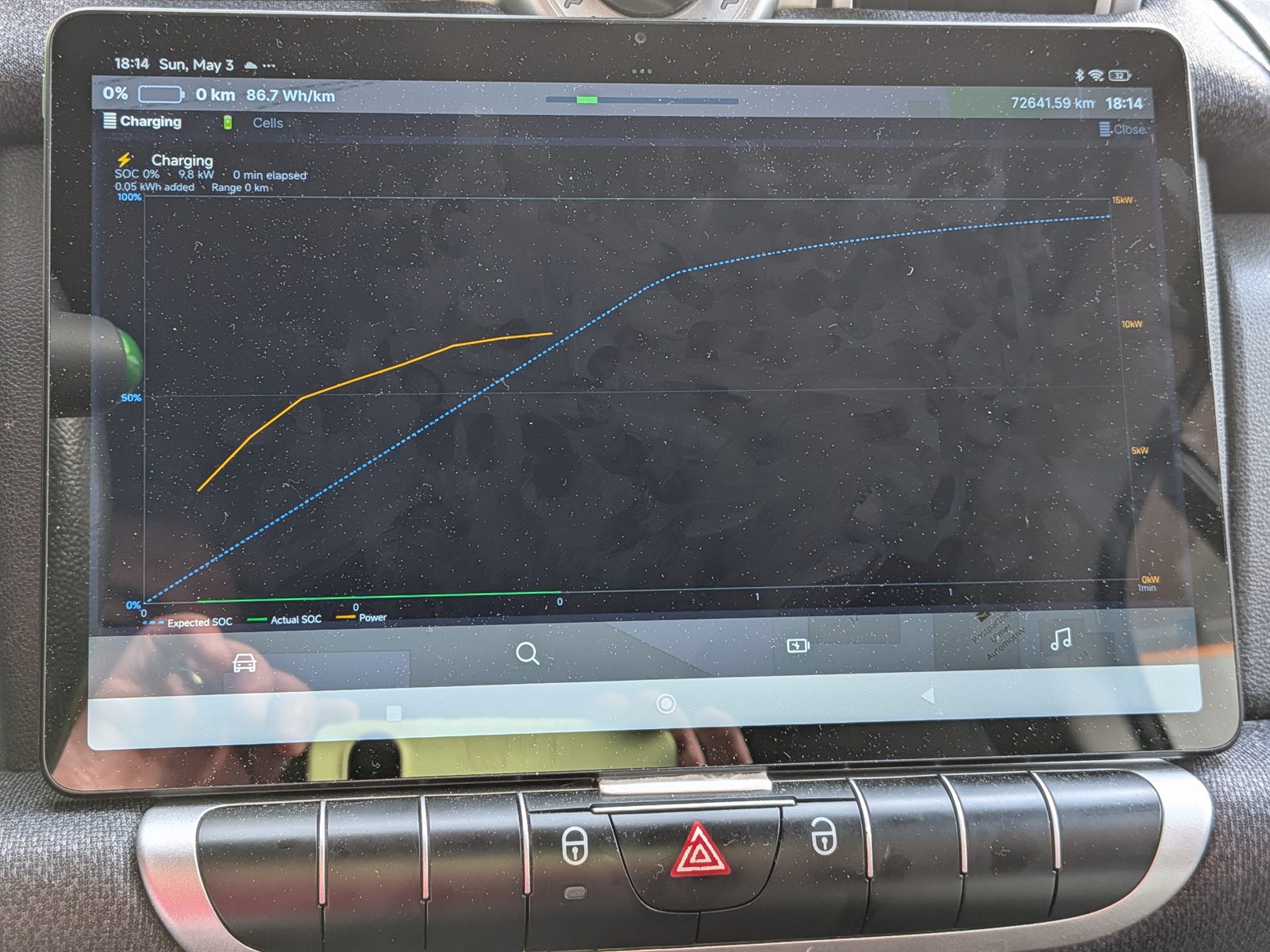
By now the evOS display read what it had read once already this trip, in Spittal: 0%. 0 km. This time there was no "just barely." The motor died. The car stopped. So we got out and pushed β shoulders against the back of a 15-year-old smart, after 880 effortless kilometres, rolling it by hand across a car park in Frastanz.
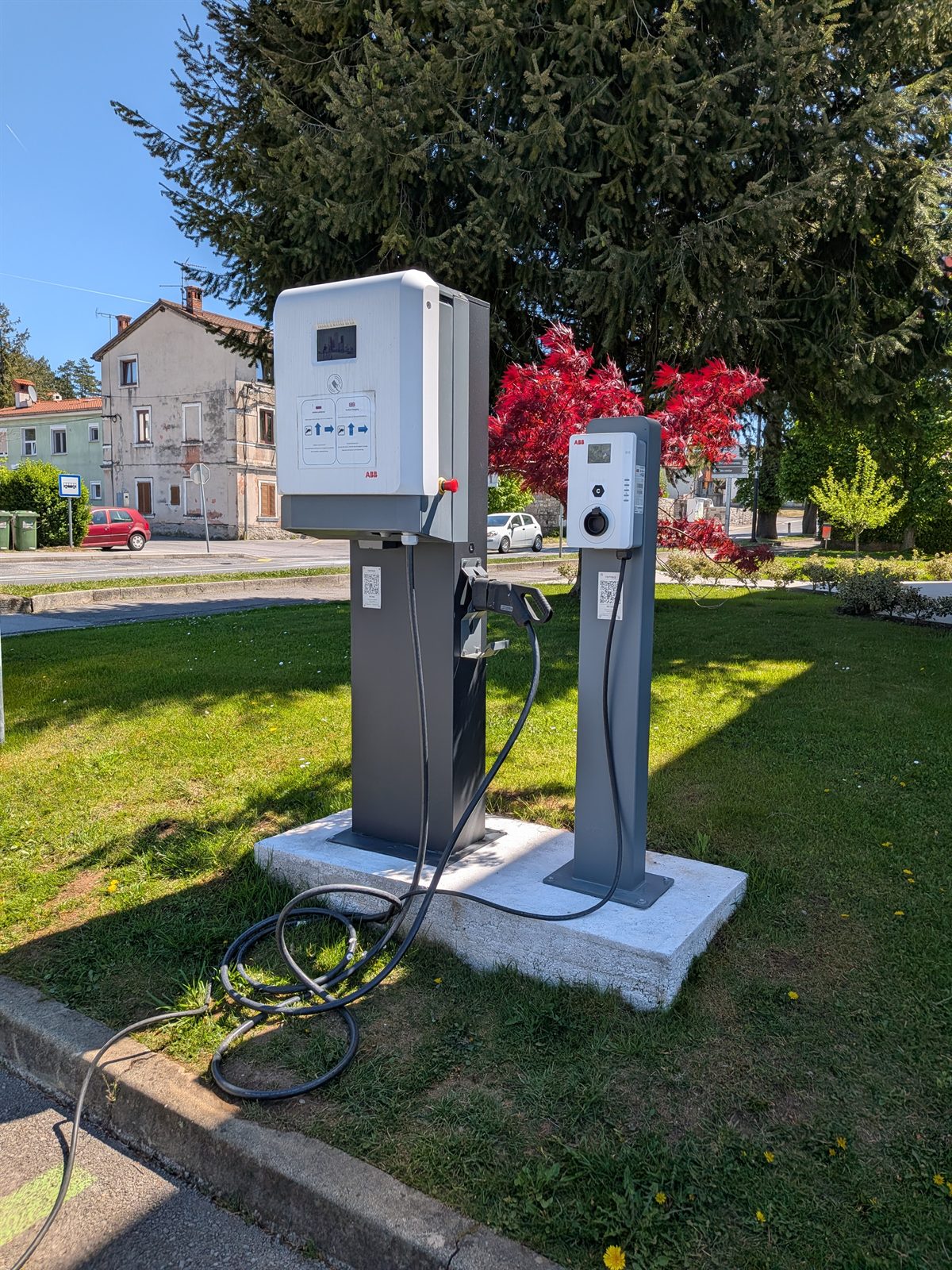
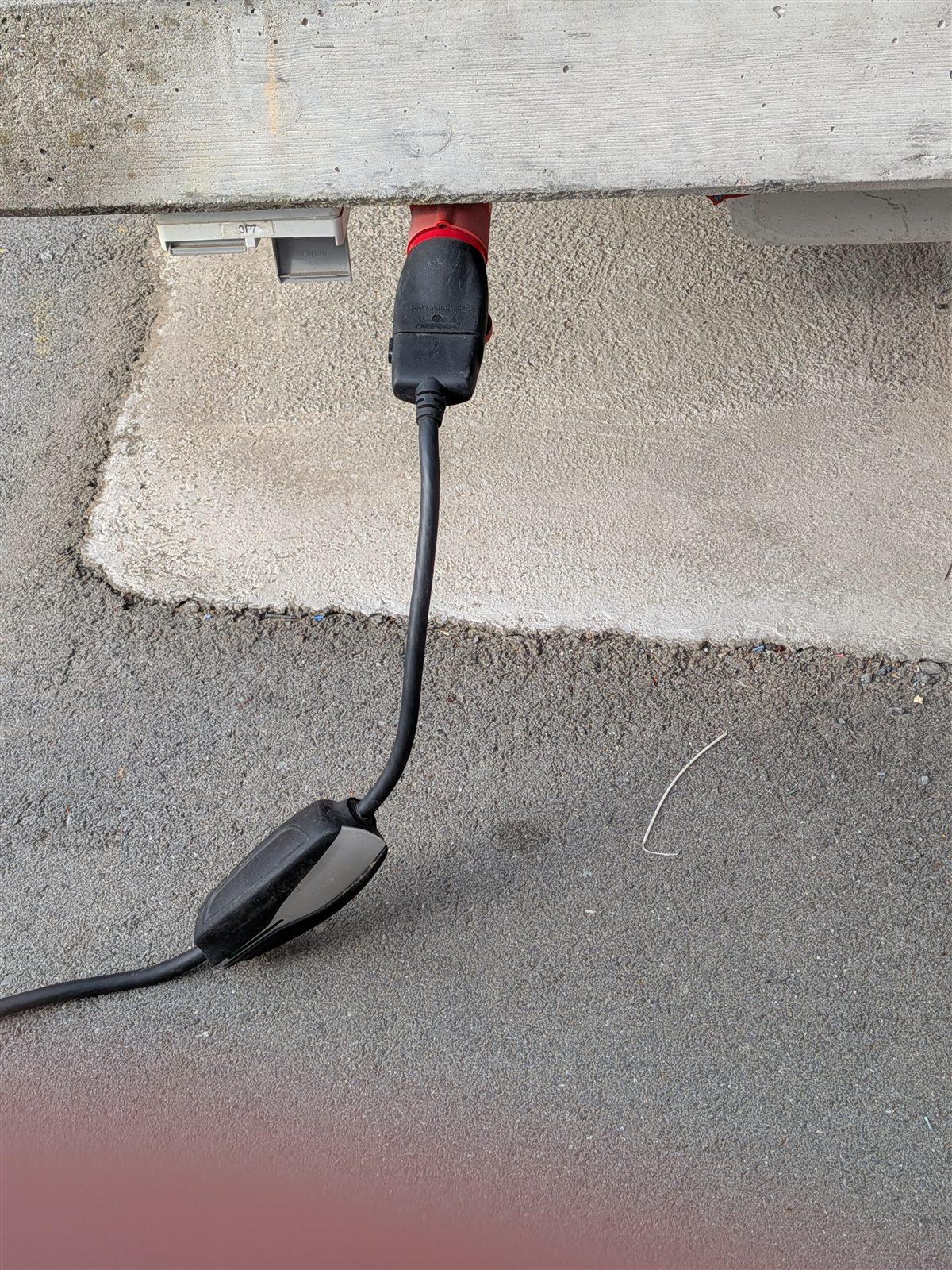
Then the copilot spotted it: a red CEE-16 three-phase industrial socket. And this is the moment I quietly thanked myself for packing the Tesla Universal Mobile Connector β the one cable that turns a random red plug into a charge. Out of the boot, into the CEE-16, and the smart finally drank.
Charger availability is still the one thing routing software can't fully solve. evOS planned the stop correctly both directions β but a plan with no slack meets reality the moment an entire village of chargers is offline, removed, barriered off, or locked to staff cards. The fix isn't better routing. It's live availability data, a margin you don't spend just because the trip felt easy β and, until then, a Tesla Universal Mobile Connector and a red plug in the boot. We knew the first part on the way out. We re-learned it, by hand, in a Frastanz car park.
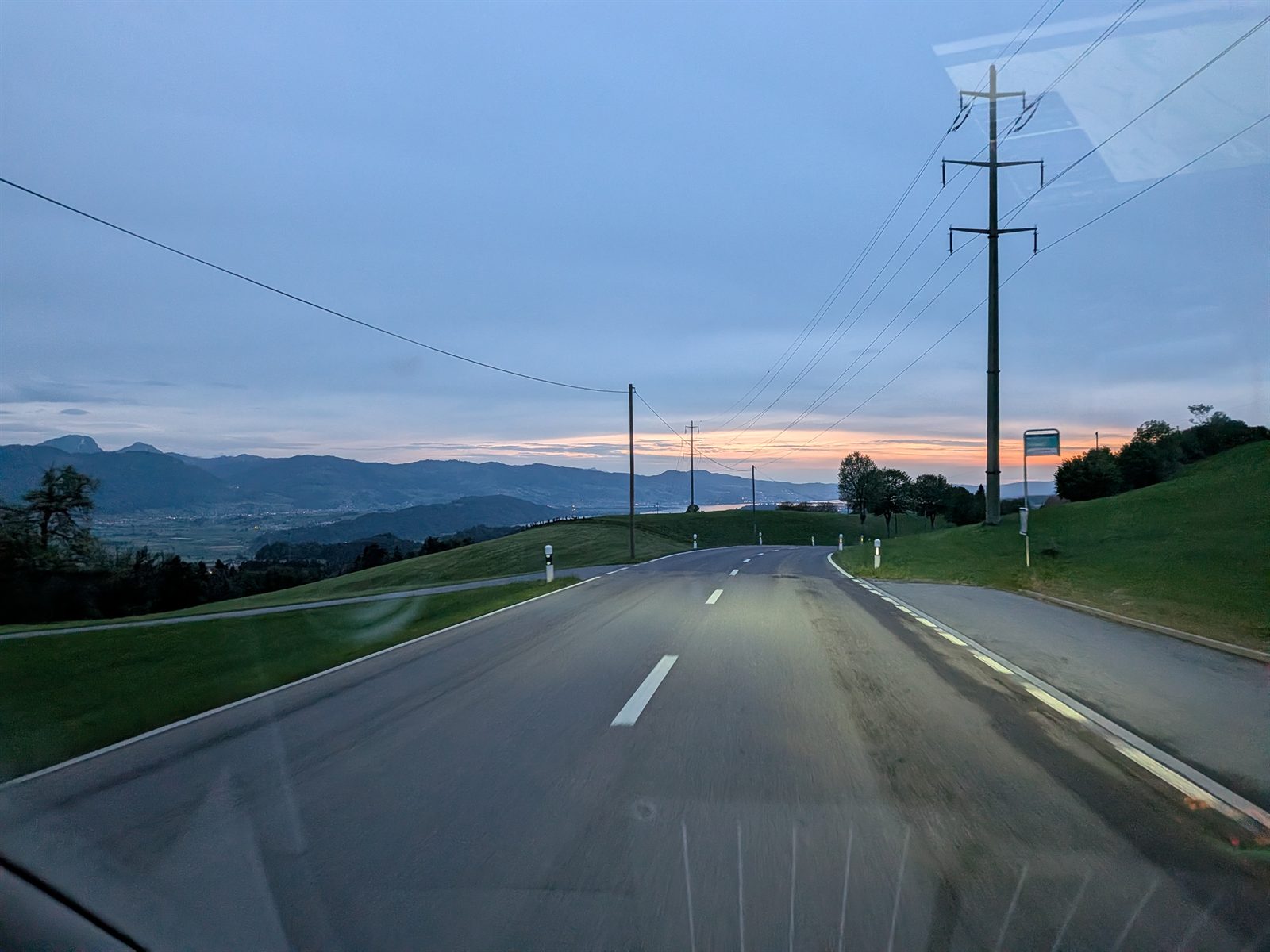
We made it. A recovery charge, a quiet run across the border, a sunset descent toward the Obersee, and home in the ZΓΌrich Oberland just after 21:00 β at a perfectly respectable 40%, the Feldkirch drama already turning into a story.
The numbers, all logged by evOS without us lifting a pen: the way home, 881.7 km at 119.0 Wh/km. The full Croatia round trip β out and back, six countries, the Alps crossed twice β 1,790.9 km at 116.2 Wh/km, in a 15-year-old electric city car with a 17.6 kWh battery.
Two long-distance legs, two 0% moments, zero times the routing was actually wrong. evOS planned every stop on both trips. The only thing that beat it was a village full of empty chargers β and even then, it was counting all the way down to zero.
1,791 km across six countries, the Alps crossed twice β the Arlberg tunnel and the Brenner through Italy on the way out, then a chosen waypoint, a loop through Germany, and the Arlberg pass on the way home β planned, sequenced, and logged end to end by evOS on real roads in a real car. The system handled elevation, charge sequencing, and two-day segments in both directions. The remaining gap isn't in the software's planning β it's in the chargers being there when you arrive. That's the next problem to solve.