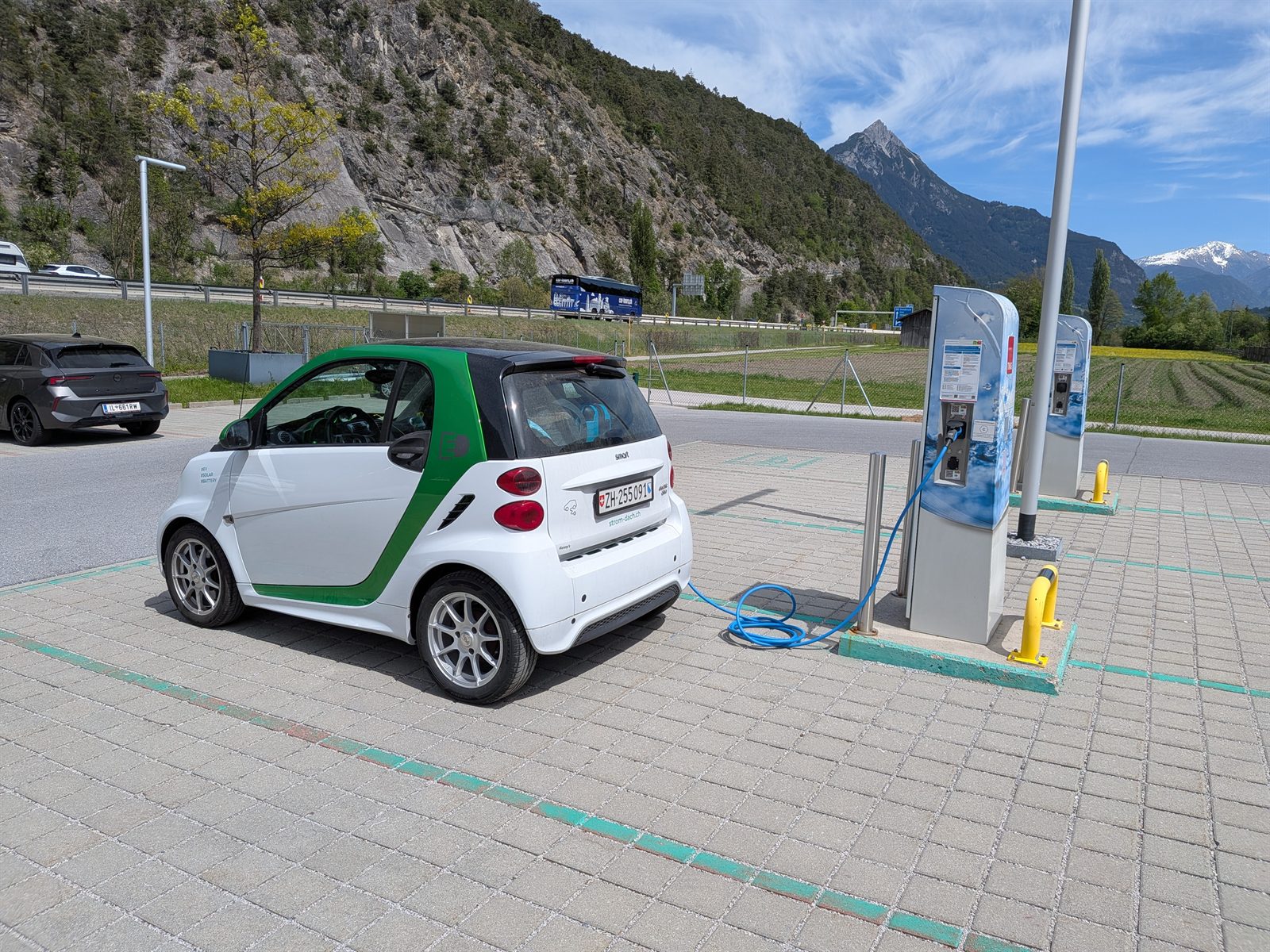
evOS is a vehicle intelligence and navigation platform for electric cars that ship with navigation too dumb to respect their own battery. Real EV routing, live vehicle telemetry, and offline maps β running on hardware you control.
evOS runs entirely in the car. A small embedded module reads vehicle data directly, a compute unit handles routing and intelligence, and a touchscreen puts it all in front of the driver.
Generic navigation doesn't understand your battery. evOS does.
Energy use is forecast per road segment based on elevation change and expected speed β not just distance. Uphill, downhill, motorway, urban: each costs what it actually costs.
evOS finds and inserts the right charging stops along your route automatically β factoring in your current SOC, arrival margin, plug availability, and charge speed. No manual planning needed.
Reads directly from the car's own data bus. Pack voltage, current, state of charge, temperatures, and vehicle state β streamed in real time to the interface.
Map data served locally β no internet dependency in the car. Full country coverage fits on a small storage card. Works in tunnels, remote areas, abroad.
Every trip auto-recorded: GPS track, SOC curve, power, speed, altitude, road type. Review sessions with summary stats or stream the raw data for analysis.
Goes well beyond the dashboard SOC number. Individual cell monitoring, pack health tracking, real-time power flow, and charge state estimates the OEM never surfaces to the driver.
Track distance, energy, and consumption across 10 separate counters β reset them independently. One for the current charge cycle, one for the trip, the rest for whatever you want to measure.
Route calculation that stays fast on long trips while remaining accurate for local roads. Energy cost is modelled per road segment β not just distance.
Full Spotify playback running directly on the in-car computer. Album art, track controls, and auth β all inside the HMI.
Push firmware updates to the vehicle interface module directly from the HMI. No laptop, no cable, no workshop visit.
evOS is production software, not a prototype. The architecture is designed to adapt to other EV models with minimal integration work.
The intelligence core and vehicle interface are written in Rust β chosen for reliability, performance, and the ability to run safely on embedded hardware without compromising the compute layer.
The driver interface runs natively on Linux (Raspberry Pi touchscreen) and Android. One codebase, two targets β so the same HMI works on a windshield tablet or a dedicated display.
Every component communicates through well-defined contracts. Swapping in a different vehicle's data source, a different map provider, or a different display is a targeted integration β not a rewrite.
Every feature in evOS was built and proven on a real vehicle β one that needed it.
The smart fortwo 451 Electric Drive is a capable little EV with one serious problem: its OEM navigation and vehicle software are essentially non-existent. No range-aware routing, no battery insight beyond a basic charge bar, no trip data worth keeping.
evOS was built to fill that gap β and in doing so, became a platform that can do the same for any EV whose manufacturer decided software wasn't worth the investment. If your car has a data bus and a driver who deserves better, evOS can work for you.
The best spec is a real trip. Here's where evOS gets tested in the wild.
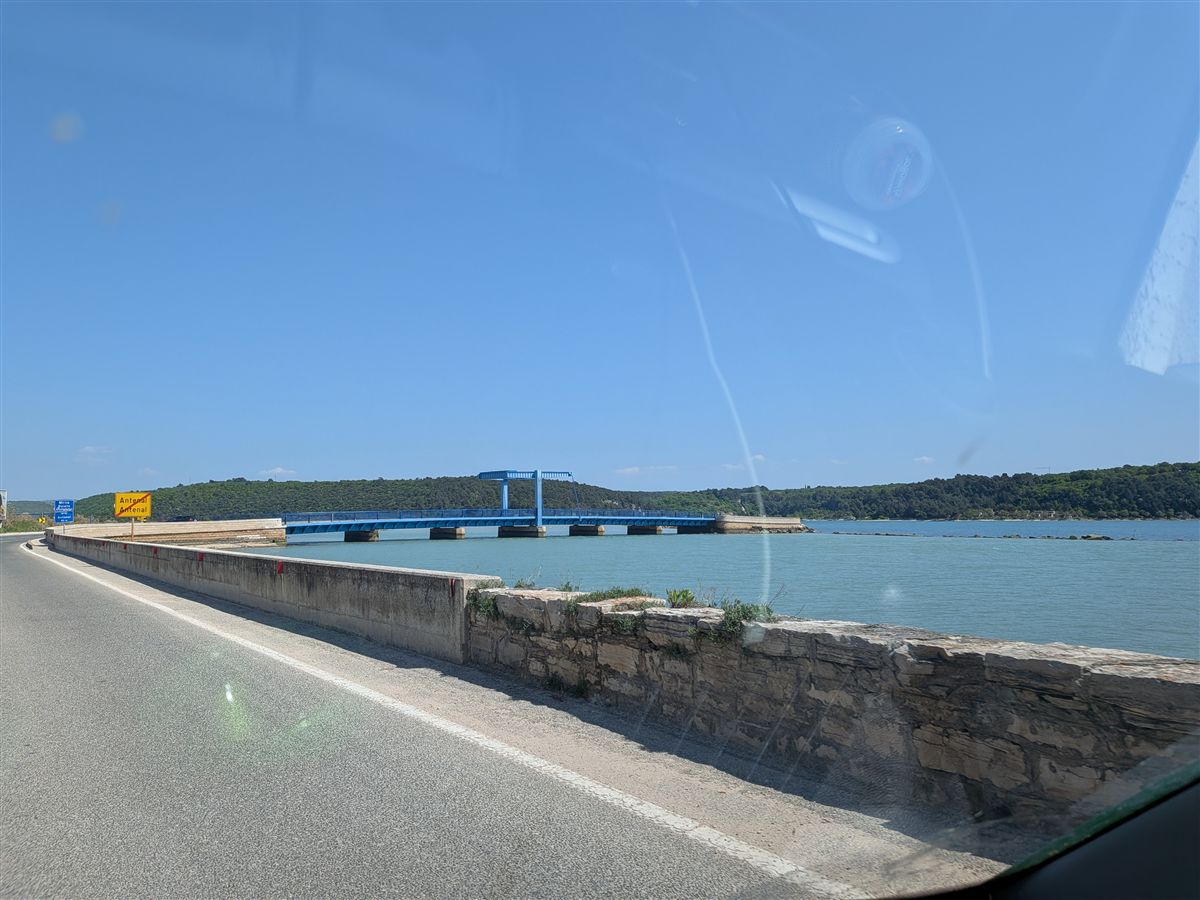
The first long-distance run with evOS fully operational. Alpine passes, motorway corridors across Austria, and the Adriatic coast β with charge stops planned and logged in real time.
The return leg β home a different way, past Salzburg and through Germany to dodge the Brenner. So uneventful we stopped logging the numbers and started feeling smug. With one charge stop to go, that turned out to be a mistake.
Across the EV industry β passenger cars, vans, trucks β drivers are working around software that wasn't built with electric mobility in mind. evOS exists because one driver got tired of waiting for someone else to fix it.
I've been driving electric for over a decade β more than 400,000 km across Tesla, Mercedes, and smart. I know what good EV software feels like, I know what bad EV software costs you on a long trip, and I know the difference between a feature that looks good in a brochure and one that matters when you're at 12% in a valley with the next charger 40 km away.
Building evOS required going further β deep integration with the vehicle's own battery management system, decoding proprietary data, understanding how the car actually behaves rather than how the spec sheet says it does. That kind of work isn't something you learn from documentation alone. You learn it by doing it, on a real vehicle, on real roads.
If you're an OEM β passenger EV, electric van, electric truck β and you want navigation and vehicle intelligence that is genuinely integrated rather than bolted on, I'm interested in that conversation. Not an aftermarket workaround. Something that starts from the vehicle's own data, speaks the driver's language, and actually helps them get where they're going with the energy they have.
The commercial EV space is solving this in the open right now β drivers and independent developers filling gaps that manufacturers haven't prioritised. I'd rather work with an OEM to do it properly.
AI-assisted development is the new normal. This project uses it and doesn't hide it.
evOS was built by one developer across embedded hardware, a systems-level compute core, and a native UI β a stack that would have taken years solo. A significant share of implementation was done pair-programming with AI tools, which handled boilerplate, scaffolding, and debugging while I drove architecture, integration, and product decisions.
The result is a more capable system, shipped faster, with more breadth than would otherwise be realistic for a side project. What I bring: the system design, the hardware integration, the product judgment, and the stubborn willingness to drive a small electric car across the Alps.
Whether you're an EV enthusiast, a potential acquirer, or just want to talk shop β reach out.
evOS is an active side project with no paying customers β yet. If you see potential in an EV-native navigation platform with a working hardware integration and a real vehicle deployment, let's talk.
Send an emailInterested in the architecture, the EV integration approach, or just want to swap notes on squeezing range out of a small electric car β happy to chat.
founder@interware.ch